
The Baird Televisor became the first television to be sold commercially for use in the home, ever since that day the market for television has grown exponentially, in the year 2025 it was worth roughly 19.94 billion US dollars. Many children around the world watch TV, you probably did, and your parents probably did too, technology and media are so heavily ingrained in daily life that it feels like you can’t look two feet away without some kind of screen in your face. Ripping on technology is not the goal here it is to explain how television is affecting society and how it is affecting children the most.
Have you ever heard the phrase ‘TV rots your brain?’ Well it is true. When children consume a lot of overstimulating media it can actually slow cognitive development and decrease attention spans, leading to less stimulating activities to be seen as boring or not worth putting time into. Time and effort should be put into children’s entertainment to ensure quality and educational fulfillment, that teaches children moral lessons and prepares them for life. Feeding children mindless entertainment meant to keep them occupied for hours so parents don’t have to play an active role in building connection with their children, choosing a screen to raise them rather than doing it themselves.
“Once I got a phone during sixth grade I stopped going outside as much and my interests began to shift more towards my phone,” junior Mia Martin said.
According to The Institute for the Future of Education, “When children’s brains are not constantly stimulated, as with this type of series, they can produce irritable, aggressive, and hostile attitudes when they do not have the instant gratification these programs provide them.”
Children need to feel “bored” sometimes so they can learn patience and not be given constant instant gratification, it teaches them how to be patient and how to manage frustrating emotions, so they don’t continue to struggle with emotional regulation into their later childhood and eventually their adulthood.
Overstimulating children’s shows are generally considered to have very bright or oversaturated colors, rapid scene changes, as well as fast paced and high pitched and high pitched or chaotic audio. Some examples of shows like this include “Cocomelon,” “Blippi,” “Paw Patrol,” “SpongeBob SquarePants,” and “Mickey Mouse Clubhouse.” While on the other hand some less stimulating shows that would be better for children include but are not limited to, “Bluey”, “Daniel Tigers Neighborhood”, “Little Bear”, “Franklin”, and “Super Why”, these shows have a much higher educational value, teaching kids about spelling, and teaching them moral lessons, while having a slower paced narrative that are easy for young children to follow along and prompt discussion with parents or guardians about the show and what they enjoyed, and learned, encouraging healthy communication.
No screen alternatives to entertain children:
According to the American Academy of Pediatrics, “Television use during the years in which children are learning to read has a negative impact on reading achievement, likely because of the displacement of reading for pleasure by entertainment television viewing.”
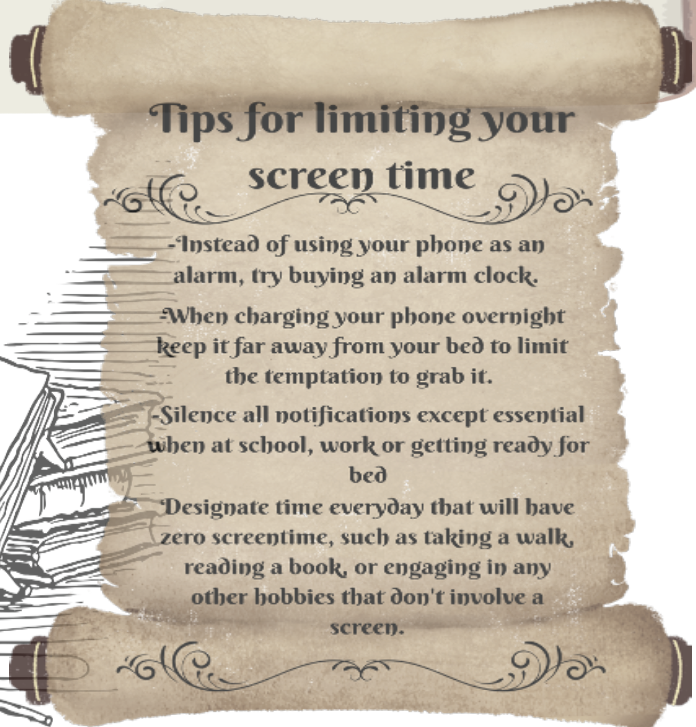
Even if your child is consuming less stimulating media, it is still important that their screen time be limited and that you participate in other activities with them to help develop their minds and their motor skills, some activities include finding time to read with your kids, try to alternate the reading, first you read than they read, or take your kids to your local museum or science center to immerse them in history and science while getting beneficial socialization with other children. Immersing your kids in nature is another good activity, taking them on a nature walk to see different animals, plants, and helping them learn to appreciate the world around them instead of staying inside with a screen in front of them all day.
Screen time is fine for children as long as the media they are consuming is not over stimulating and benefits their cognitive development as well as taking frequent breaks for them to engage in activities that do not involve a screen, understanding what media is harmful for children and avoiding it is significantly beneficial for children’s mental development.